Saturday, June 3, 2023

Madras in an Eighteenth Century Poem: Temples, Patrons and Urban landscape as seen in Sarva-deva-vilasa

A look at the world of politics, statecraft, diplomacy and books

Several decades back Dr V Raghavan published the Sarva-deva-Vilasa in the Adyar Library Series. This Champu, written in both prose and poetry, does not rank high for its literary merits as it is replete with violations of the rule of Sandhi, intersperses Sanskrit with Tamil and Telugu colloquialisms, and there are grammatical bloopers as well. However, it provides us a glimpse of the City of Madras as it fell under the growing influence of the s'veta mukha palita, the white faced as this poem rather inelegantly calls the English. 

The author is as yet unknown but the two protagonists are referred to as Vivekin and Ativivekin, intelligent and more intelligent, respectively. Both are in search of new patrons for their craft, the kathakalakshepa, religious and ethical discourse. And as astute observers of the social and economic changes in the City, they latch on to three or four men, all of whom were connected in some form or other with the East India Company and its trading activities. Some of the men appear in Historical Records put together by Love and so we can date the poem circa late 18th century as the Mayor's Court was established in 1753 and one of the personages mentioned was a Kanakkappa,  the dubash ( Interpreter) to the Court. Kalingaraya, Srirangaraya, and Vedachala were the prime patrons and the poems revolves around them and the social network in which they lives circled. These three men belonged to the socially dominant community that arose to prominence in the late Vijayanagara period: the Tondaimandala Vellalas. 

The poem provides a list of temples in and around the city of Madras,and even Ramalinga Swamiar, called it, "dharma migu Cennai". Vaisnava and Saiva temples received patronage from these upcoming magnates who sought opportunities for social and economic advancement by collaborating with the East India Company and its traders. Textile trade, pearl and diamond trade, beetle leaf monopoly, money lending were all part of the portfolio of interests that this new group commanded in Madras, Pulicat, Pondicherry and Nagapattinam. As agents controlling the textile trade at both the production and distribution points, these men became immensely wealthy and replaced the kings and chieftains who had patronised literature and art earlier. In fact all three patrons mentioned in the poem were dharmakarttas, temple controllers    
Perumal Temple Tirunirmalai

The temple at Tirunirmalai is a divyadesam and the poem describes the palace as Toyadri thereby indicating its high status among Vaishnava holy places .Our poets visited this temple along with Vedachala and in the evening there was organized a sadas in which
  music and dance were exhibited. The poets were gratified to receive gifts from their patron.

 The Krishna Temple in Coral Merchants Street was an important place of worship in the 18th century.  Along with the Chenna Keshava Perumal Temple, this temple too was built towards the middle of the 18th century, after the "native" population had been evicted from the Fort. 

Agastesvara Temple
Nungambakkam, looked far different in the 18th century than now.  The Long Tank which stretched from Mylapore to Tennampet and spread into Nungambakkam, gave the names by which these parts are known today: Spur Tank Road.  The Agastyeesvara Temple was an important shrine and our poets visited it and they refer to the Big Lake along side this temple. The Long Tank was drained in the last quarter of the 19th century and the vestiges of the Long Tank disappeared when Karunanidhi decided to build the Valluvar Kottam.

Vasavi Kanyaka Perumal Temple 
Kotwal Chavadi Black Town
The Vasavi Kanyaka Temple was one of the most important  shrines associated with the Beri Chetti Community of South India. A detailed description of this temple is given in the poem and before Kotwal Chavadi yeilded its importance to Koyembedu, this was a thriving commercial centre.  In all the sites visited, the poets participated in the religious festivities which often culminated in all night Katha Kalekshepa 


The Sarva deva Vilasa offers us a unique glimpse into the social and cultural life of the indigenous population in the cusp of colonial rule. There are references to the influence of Military Band music on Carnatic Music, the early use of violin, a western instrument, in the emerging repertoire of Classical compositions, and we find adequate enough information about the landmarks of Old Madras. 


Thursday, May 25, 2023

Pierre Laval:: Patriot, Traitor or Collaborator Laval needs to be reviewed critically

A look at the world of politics, statecraft, diplomacy and books
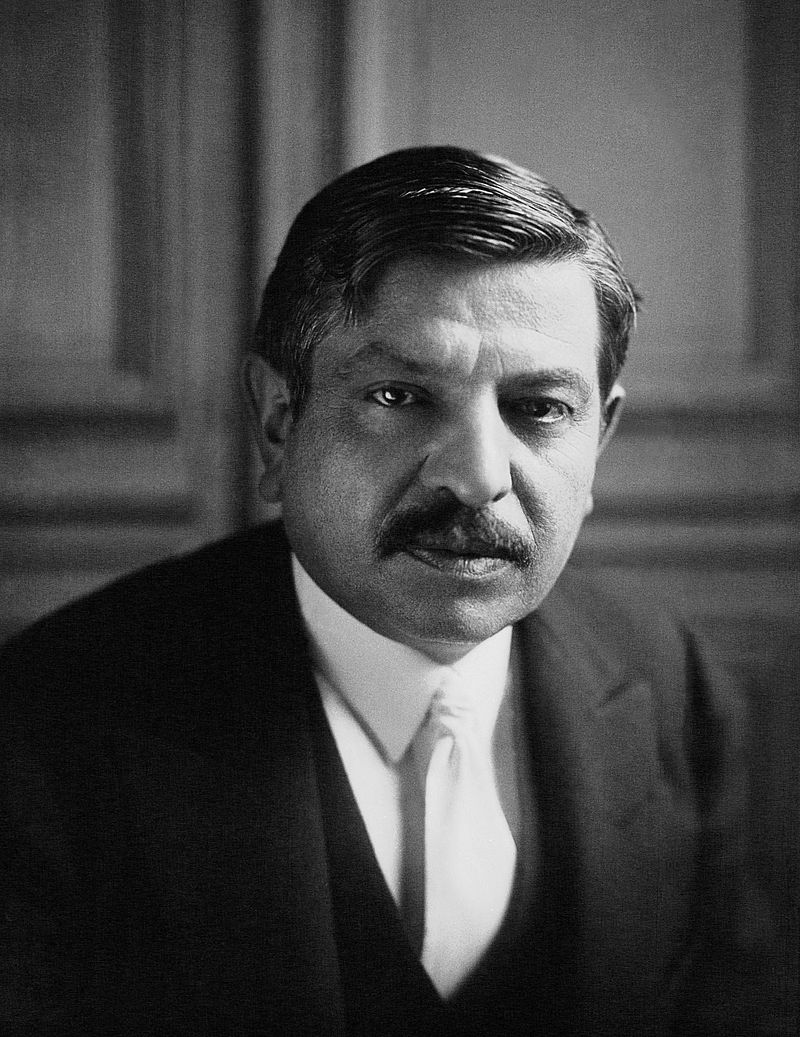
Pierre Laval 

    Pierre Laval (1883- 1945) was Prime        Minister of France three thrice, served       as a   Minister of the Third Republic        13   times and   was Foreign Minister         and President of the   Council. A socialist   by conviction and a   French patriot, by   choice he became the   victim of Charles   de Gaulle's politics and   his  execution in   1945 after a trial that even   Stalin would   have found embarrassing,: a   grotesque   

Kafkaesque political drama in   which Laval was denied a fair trial without   witnesses, documents or evidence. And his meeting with Hitler as Prime Minister and with Mussolini earlier held up as evidence of treason, collaboration and therefore guilty.

The great Athenian Historian, Thucydides wrote with great insight, nearly two thousand five hundred years back, "to fit in  with the change of events, words too  had to change their usual meaning." Ideology and political expediency demanded a new Hero and a new Church and the hero and the church required a sacrifice in blood and that was paid by Laval. On the night preceding his execution he tried to kill himself and it was decided to shoot him on a stretcher, if he  could not walk. De Gaulle claimed that his "Fighting France" had "liberated" France from the Germans. The truth is that he was allowed to march a small contingent of 500 men at the head of the Anglo American column and thus the keystone of the Gaullist ideology rests on a piece of contrived propaganda. Gaulle did not liberate France and neither was Pierre Laval a collaborator or a traitor. De Gaulle with the help of the Communists and elements of the French Right whipped up a cloud of passion which cast deep doubts on the motives and actions of Pierre Laval. Unfortunately, the Gaullist State institutionalised the self serving ideologically potent myth and like marionettes Historians are dancing ever since to this absurdity. In fact anyone even suggesting a more nuanced and balanced opinion or assessment is usually hollered down by the rabid defenders of de Gaulle. 

Few Historians recognise today that Pierre Laval was the first European statesman to understand the danger posed by Hitler. After  becoming Prime Minister in 1931 he sought to bring Social Insurance and succeeded and to this day his scheme lasts. In 1935 as Prime Minister he met Mussolini in Rome and convinced him to accept the responsibility of defending Austria and when the Germans assassinated the Austrian Chancellor, Dollfuss, it was Italy that forced Germany and Hitler to back off from outright annexation. Recognizing the danger posed by Germany and responding to that danger by creating an international coalition with Italy and Britain fell through as Britain was going through it "appeasement" phase and when Britain accepted the remilitarization of the Rhineland without a whisper of protest, Laval realised that in any confrontation France would be left high and dry. The same fear took him to Moscow, but Stalin too was in no mood to confront Germany. Given this track record of diplomacy against Hitler's Germany, Laval can be termed a "fascist" and "collaborator" only by those who use History  as a tool of political legitimation. Samuel Hoare the Foreign Minister of Britain signed an agreement with Laval but it created a storm in Britain which did not quite see Germany as an existential threat to civilization, and Laval clearly did. When Laval's policy of containment fell through, he became more prudent. 

In 1940 when Germany invaded France and concluded an  Armistice which was hugely popular, Laval had no role in this at all as he became Prime Minister under Marshall  Phillipe Pe'tain after the Armistice. Does this transfer of power which took place with  the concurrence of the National Assembly constitute treason. The charge of treason cannot be made unless we take into consideration the fact that the Armed Forces, Police and territory were firmly controlled by the existing Government. I hesitate to use the very word Vichy as it carries the stain of Gaullist invective. De Gaulle went to France where he was permitted to claim that he represented "Free France", the Cross of Loraine that Sir Winston Churchill and the Allies carried reluctantly. Pierre Laval was dismissed in 1940 and for the next two years he remained out of office. He was recalled in 1942 and held office until 1944. Only the retrospective judgement marinated in expediency and political need can lead to the imposition of the construct of Traitor and Collaborator on Laval.

Pierre Laval kept French institutions clear of German influence and all the judges on the hastily constituted a High Court of Justice including the chief, Paul Mongibeaux were all servants of the Vichy Government and they did not see the irony of sitting in judgement on a man who was its head. The fact is de Gaulle wanted Pierre Laval punished and executed so that he could build his political future on dead Laval. The jury consisted by Socialists who were politically opposed to Vichy and a death sentence was handed down and on 15th October 1945 Laval faced a firing squad. The trial and sentence were timed so that before the Elections in 1945, de Gaulle could appear before the French as the Grand H'omme the saviour of "Eternal France" and refurbish its image as a Great Power. And the removal of Laval did accomplish all this. France's defeat and neutrality (not collaboration) could be wiped clean and the Gallic Coq was free to strut its stuff on the world's stage. 

The most egregious charge against Pierre Laval was with regard to the French Navy anchored in North Africa. The British planes bombed the ships destroying the ships killing 1300 sailors on board, an attack similar to the Pearl Harbour Attack by Japan. Even this provocation did not lead to France declaring war against England and thereby proving the neutrality of Vichy. How could this incident be brought as evidence of a hostile attitude towards France. Political necessity had created a climate in which honest assessment of Laval's role was neither made nor attempted. And de Gaulle was waiting in the wings to erect his political future on the corpse of Pierre Laval.

An assessment of Pierre Laval must consider the circumstances of his regime and with the exception of Rousso few Historians have taken those under consideration. Pierre Laval preserved France as State and Country in the face of huge challenges. Nazification of French public institutions was resisted almost till the bitter end. German demands for labour was met but with reluctance and Jewish persecution was resisted till the end of 1943 when it became impossible for France to fight Germany.

An assessment of Pierre Laval must consider all  these facts.